
Salud mental
09-10-2026
Fecha de publicación: 27-11-2026
Actualizado en: 27-11-2026
Asunto: Salud mental
Tiempo estimado de lectura: 1 min

Editor médico
Marco Lorusso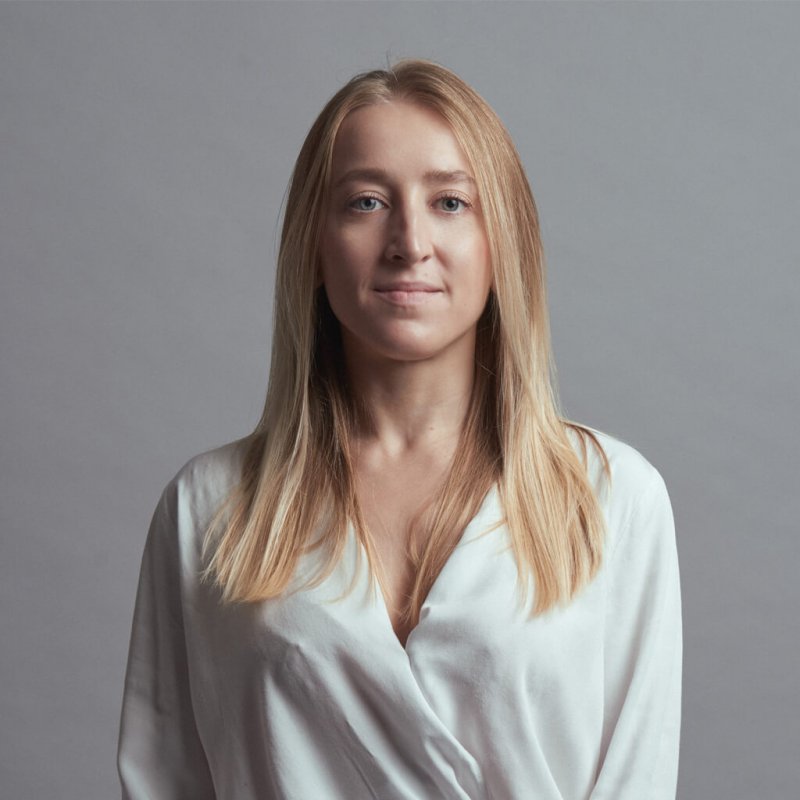
Editor y Traductor
Viktoryia LuhakovaPsychological distress in men is often under-recognised because it does not always present as sadness. It may take the form of irritability, anger, withdrawal, insomnia or a sudden increase in work commitments and, for this reason, may be interpreted by those around the person, and sometimes by the person himself, as simple tiredness.
Underlying this difficulty in recognising distress are often male stereotypes: the idea that a man should always be strong, independent and able to cope on his own. We discuss this with Dr Marco Lorusso, psychologist, neuropsychologist and psychotherapist at Villa Erbosa and Casa di Cura Villa Chiara in Bologna.
“The most deeply rooted stereotypes are those of the man who must always be strong, independent, rational and capable of dealing with any difficulty without asking for help. In my clinical experience, I often meet men who have learned to see vulnerability as weakness, sadness as something to hide and asking for support as a personal failure,” explains the specialist.
Added to this is the idea of having to keep everything under control: career, family, emotions, relationships and sexuality. When something goes wrong, the difficulty may be experienced as proof of not being good enough.
“The problem is not wanting to be strong, but convincing yourself that you are never allowed to be vulnerable,” Dr Lorusso concludes.
These patterns often develop from childhood through education and the surrounding social environment. Repeated messages such as “don’t cry, you’re a boy” or “you have to deal with it yourself” can create an association between masculinity and emotional suppression.
In adulthood, this may translate into fear of other people’s judgement or the belief that one should always be self-sufficient.
When people think of anxiety or depression, they often imagine someone who is visibly sad and distressed. In men, however, psychological distress may also present through less immediately recognisable signs, such as:
These are non-specific signs: anger and irritability, like the other behaviours listed, do not necessarily indicate depression, but they may warrant further assessment as part of a broader clinical evaluation.
“It is important to point out that there is no exclusively ‘male’ depression and no exclusively ‘female’ depression: the main clinical symptoms may be the same. However, the way symptoms are recognised and expressed can be influenced by cultural models and social expectations,” the specialist explains.
The body can also signal psychological distress, as physical and mental health are closely interconnected. Anxiety and mood disorders may be associated with physical symptoms such as:
“In many cases, it is actually the physical symptom that leads a man to seek medical advice, while the emotional component initially remains in the background,” the specialist adds.
However, a physical symptom should never automatically be attributed to a psychological problem. Possible organic causes must always be considered and, where appropriate, medically assessed.
One of the more complex effects of stereotypes is the tendency to minimise symptoms or delay seeking help.
“Overinvestment in work can become a true avoidance mechanism: the more a person keeps himself immersed in commitments, the further he moves away from what is causing him pain,” notes Dr Lorusso.
Signs that may be particularly easy to overlook include:
“Continuing to function does not necessarily mean being well. Maintaining work performance or everyday responsibilities does not rule out the presence of significant psychological distress,” the specialist emphasises.
“One of the most common barriers is the fear that asking for help may undermine one’s image as an independent and capable man,” explains the specialist.
Beliefs may emerge such as: “I have to solve my problems on my own” or “other people have it worse than I do, I just need to pull myself together.”
Other barriers include:
“The risk is that support is sought only when the distress has already become difficult to manage,” Dr Lorusso concludes.
Certain stages of life can also make people particularly vulnerable and, in men, may conflict with expectations linked to their perceived role: losing a job or experiencing financial difficulties, separation, bereavement, the birth of a child, a new medical diagnosis or retirement.
“These are events that can affect a person’s sense of self, particularly when self-esteem is strongly linked to professional status or the ability to provide for the family,” explains Dr Lorusso.
Psychological distress in men and difficulties in seeking support have been widely studied in the scientific literature.
A systematic review published in Clinical Psychology Review in 2016 by Seidler and colleagues found that rigid adherence to traditional masculine norms may act as a barrier to seeking help for depression.
A European study published in the Journal of Epidemiology & Community Health in 2014 by Kovess-Masfety and colleagues, involving 37,289 people from 10 European countries, including Italy, found that overall women used mental health services more frequently than men, with differences also related to the type and severity of mental disorders.
The World Health Organization, in a 2020 report on men’s mental health in the European Region, also identified emphasis on self-reliance, emotional control and difficulty expressing vulnerability among the main barriers to seeking help.
There is also another significant figure: according to Eurostat data for 2023, the crude suicide mortality rate in the European Union was 16.9 deaths per 100,000 men compared with 5.0 per 100,000 women — approximately 3.4 times higher among men.
“Suicide is a complex and multifactorial phenomenon and cannot be reduced to the issue of stereotypes alone. However, these figures remind us how important it is to identify psychological distress early and make access to support as straightforward as possible,” Dr Lorusso clarifies.
It is advisable to seek professional support when:
The main professionals involved are:
“There is not necessarily one professional who should always be consulted first: the choice depends on the nature of the problem and the severity of the symptoms. Psychotherapy and pharmacological treatment are not alternatives to one another; when appropriate, they can complement each other very effectively,” the specialist explains.
The first consultation does not require any particular preparation. It is a professional space for listening and clinical assessment, designed to:
People close to a man who is struggling are often the first to notice changes in behaviour: for example, someone who is usually sociable becoming increasingly withdrawn, or someone who is normally calm becoming progressively more irritable.
“The advice is to approach the person without judgement and without expecting immediate answers. Phrases such as ‘you need to pull yourself together’ or ‘you have no reason to feel bad’ risk increasing the sense of not being understood. It is more effective to express concern based on concrete observations, for example: ‘You seem tired and distant lately, is something worrying you?’,” explains Dr Lorusso.
A family member or partner can encourage the person to seek help, offer practical support and be available to listen, without taking on the role of therapist.
“We cannot always resolve the suffering of someone we care about, But we can help create the conditions in which they do not have to face it alone,” the specialist concludes.
Seidler Z. E. et al. (2016). The role of masculinity in men’s help-seeking for depression: A systematic review. Clinical Psychology Review, 49, 106–118. https://doi.org/10.1016/j.cpr.2016.09.002
Kovess-Masfety V. et al. (2014). Are there gender differences in service use for mental disorders across countries in the European Union? Journal of Epidemiology & Community Health, 68, 649–656. https://doi.org/10.1136/jech-2013-202962
Gough B., Novikova I. (2020). Mental health, men and culture. WHO Regional Office for Europe. https://www.who.int/europe/publications/i/item/9789289055130
Eurostat (9 September 2026). Deaths by suicide in the EU: a slight decline in 2023.https://ec.europa.eu/eurostat/en/web/products-eurostat-news/w/edn-20260909-1