
Enfermedades cardiovasculares
02-10-2026
Fecha de publicación: 12-05-2026
Actualizado en: 29-07-2026
Asunto: Enfermedades cardiovasculares
Tiempo estimado de lectura: 1 min

Autor del Artículo
Eleonora Orioli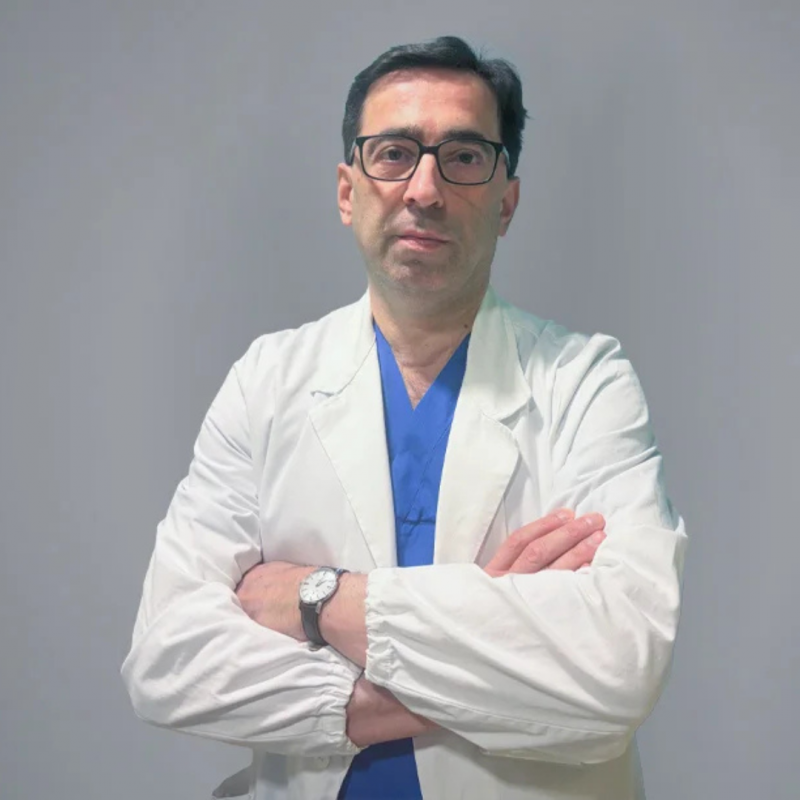
Editor médico
Andrea Mainente
Editor y Traductor
Viktoryia LuhakovaSwollen and heavy legs are a common and often underestimated condition that can significantly affect quality of life. It is a problem that affects a large portion of the population, both men and women, although it is more prevalent among women.
Feelings of heaviness, tightness, or swelling in the lower limbs tend to appear especially at the end of the day and may worsen under certain conditions such as hot weather, prolonged standing, or a sedentary lifestyle. Physical activity can help relieve these symptoms, but in some cases it is not enough.
We discussed this with Dr. Andrea Mainente, vascular surgeon and Head of the Angiology and Vascular Surgery Service at Istituto Clinico San Siro, who explains what to do in cases of swollen and heavy legs and when it is advisable to consult an angiologist or vascular surgeon.
The causes of swollen and heavy legs are multiple and are not always vascular in origin, contrary to common belief.
“Only in a small proportion of cases is the problem primarily vascular. Venous insufficiency or superficial thrombosis, for example, may contribute to these symptoms, but they are often not the main cause of swelling.
The most common causes of swollen and heavy legs are actually orthopedic and physiatric conditions related to postural or mechanical problems. Alterations such as:
can affect weight-bearing and gait dynamics, leading to functional overload that also impacts the lower limbs,” emphasizes the specialist
Over time, additional factors such as osteoarthritis or the consequences of surgery involving major joints (knee and hip) may further contribute to symptom development.
Alongside these primary causes, there are aggravating factors that worsen venous and lymphatic return, including:
The main symptoms of swollen and heavy legs include:
In some cases, fatigue, tingling, or cramps may also occur, especially in the evening hours.
This happens because the tissues of the legs tend to accumulate fluid in the interstitial spaces due to an imbalance between venous and lymphatic circulation and the tissues’ drainage capacity. When this system does not function efficiently, fluid stagnation occurs, leading to edema, or visible and palpable swelling.
Swollen and heavy legs tend to worsen during late spring and summer due to higher temperatures, which promote vasodilation and fluid retention.
“However, in people with postural or joint problems, swelling may be present year-round and may not be strictly related to seasonality. In these cases, it is important not to underestimate the symptoms and to consult a specialist to identify the exact cause and establish targeted treatment,” says the specialist.
Understanding whether swollen legs are a temporary issue or a chronic condition is essential for choosing the most appropriate treatment. Dr. Mainente explains:
“The time factor is crucial:
Physical activity plays a fundamental role in symptom management, but it is not always sufficient on its own.
“Movement is essential because it activates the venous and lymphatic systems. Veins and lymphatic circulation depend on muscle contraction to return fluid from the lower limbs. Without movement, fluid stagnation occurs,” explains the specialist.
In many cases, exercise alone is not enough to solve the problem, especially when structural alterations are involved. In these situations, an integrated approach becomes essential and may include:
Certain signs associated with swollen and heavy legs may indicate the need for evaluation by an angiologist or vascular surgeon:
Accurate diagnosis is essential to identify the cause of swollen and heavy legs and to rule out conditions such as thrombosis or venous insufficiency.
The reference examination is venous Doppler ultrasound of the lower limbs, which allows physicians to:
The examination is then complemented by an angiological consultation.
“It is important to perform the instrumental examination first,” emphasizes Dr. Mainente, “because clinical evaluation alone is not sufficient to establish a complete diagnosis.”
In addition, when an orthopedic issue is suspected, postural assessment may also be useful to evaluate posture, foot support, and joint function.
Treatment options vary depending on the underlying cause of swollen and heavy legs. In the most common cases, treatment is conservative and includes:
“It is important to emphasize that medications alone are not sufficient and should always be combined with other strategies, particularly compression stockings. There is no single solution. Treatment must be personalized and often combined,” specifies the specialist.
In cases of significant venous insufficiency, minimally invasive or surgical treatments may be necessary to correct venous reflux and prevent complications such as thrombosis or phlebitis.
One of the cornerstones in the management of swollen legs is the use of graduated compression stockings, which are often underestimated or used incorrectly.
“Compression stockings are essential,” emphasizes Dr. Mainente. “They should be worn daily and represent the foundation of treatment, especially in individuals who spend many hours standing or sitting.”
There are preventive and therapeutic stockings with different levels of compression. The former are lighter and suitable for everyday use, while the latter are indicated in more complex cases.
The physician also highlights a practical aspect that is often overlooked: “The level of compression must be personalized. A device that is too strong or unsuitable for the patient may be difficult to wear and therefore remain unused.”
Prevention plays a fundamental role and is based on simple daily habits:
“As we have seen, early use of preventive compression stockings can also help significantly reduce symptoms,” concludes Dr. Mainente.