Afecțiuni pancreatice
22-10-2026
Data publicării: 10-07-2026
Actualizare la: 10-07-2026
Subiect:
Durată de citire estimată: 1 min.

Redactor medical
Matteo Maria Marino
Editor și traducător
Viktoryia LuhakovaOne of the most common questions women ask after breast augmentation is how long breast implants last and whether they will eventually need to be replaced.
The answer is more complex than it may seem. Modern breast implants are highly reliable medical devices designed to last for many years, but they are not considered lifetime devices. Over time, changes may occur either in the implant itself or in the breast tissues, making a specialist evaluation advisable. We explore the topic with Dr. Matteo Maria Marino, Head of the Plastic and Reconstructive Surgery Unit at IRCCS Ospedale Galeazzi-Sant'Ambrogio.
Breast implant replacement is not necessarily an urgent procedure, nor is it something that should automatically be scheduled after a specific number of years. The decision should be based on the condition of the implant, the quality of the surrounding tissues, and the patient's individual needs.
"Breast augmentation is one of the most frequently performed procedures in plastic surgery and has one of the highest patient satisfaction rates. Over the past few years, breast implants have evolved significantly, becoming safer and more advanced than ever before. However, this does not mean they no longer require regular monitoring over time," explains Dr. Marino.
There is no universal timeline for breast implant replacement. The need for revision surgery depends on several factors, including:
In some cases, the patient simply wishes to change the aesthetic result achieved years earlier by choosing a different implant size or a shape that better suits her body today.
"As time passes, it isn't just the implant that changes, the breast tissues change as well. The skin may lose elasticity, and the breasts can naturally shift position. For this reason, when evaluating revision surgery, we always assess the breast as a whole rather than focusing solely on the implant," Dr. Marino emphasizes.
Older-generation breast implants may warrant reassessment approximately 10 to 15 years after surgery, but this is not a strict rule. The decision is guided by clinical examinations and, when appropriate, diagnostic imaging.
After breast implants are placed, the body naturally forms a thin fibrous capsule around each implant. This capsule helps keep the implant securely positioned within the breast. Over time, however, this stability may decrease. Breast tissues can weaken, the skin may lose firmness, and the implant may gradually shift from its original position. The most common causes include:
Implant displacement can alter the shape of the breast and compromise the cosmetic outcome achieved with the original procedure.
A specialist evaluation is recommended whenever noticeable changes occur. Common signs include:
"Any change in the shape, volume, or consistency of the breast deserves evaluation by a specialist. In most cases, these situations are not emergencies, but it is important to identify the underlying cause and determine the most appropriate course of treatment," explains Dr. Marino.
A breast implant showing signs of deterioration may present with:
Women should seek a specialist evaluation if they notice that one breast has suddenly become harder, softer, or simply feels different from before.
Modern silicone breast implants contain highly cohesive gel that tends to retain its shape even if the outer shell ruptures, rather than leaking into the surrounding tissues like a liquid.
"A ruptured breast implant is not necessarily a surgical emergency, but it is a condition that should be properly evaluated and managed in a timely manner to prevent complications and allow revision surgery to be planned appropriately," Dr. Marino concludes.
If you suspect that a breast implant has shifted, ruptured, or deteriorated, it is important to consult a plastic surgeon for a thorough evaluation. The assessment always begins with a specialist consultation, during which the surgeon examines:
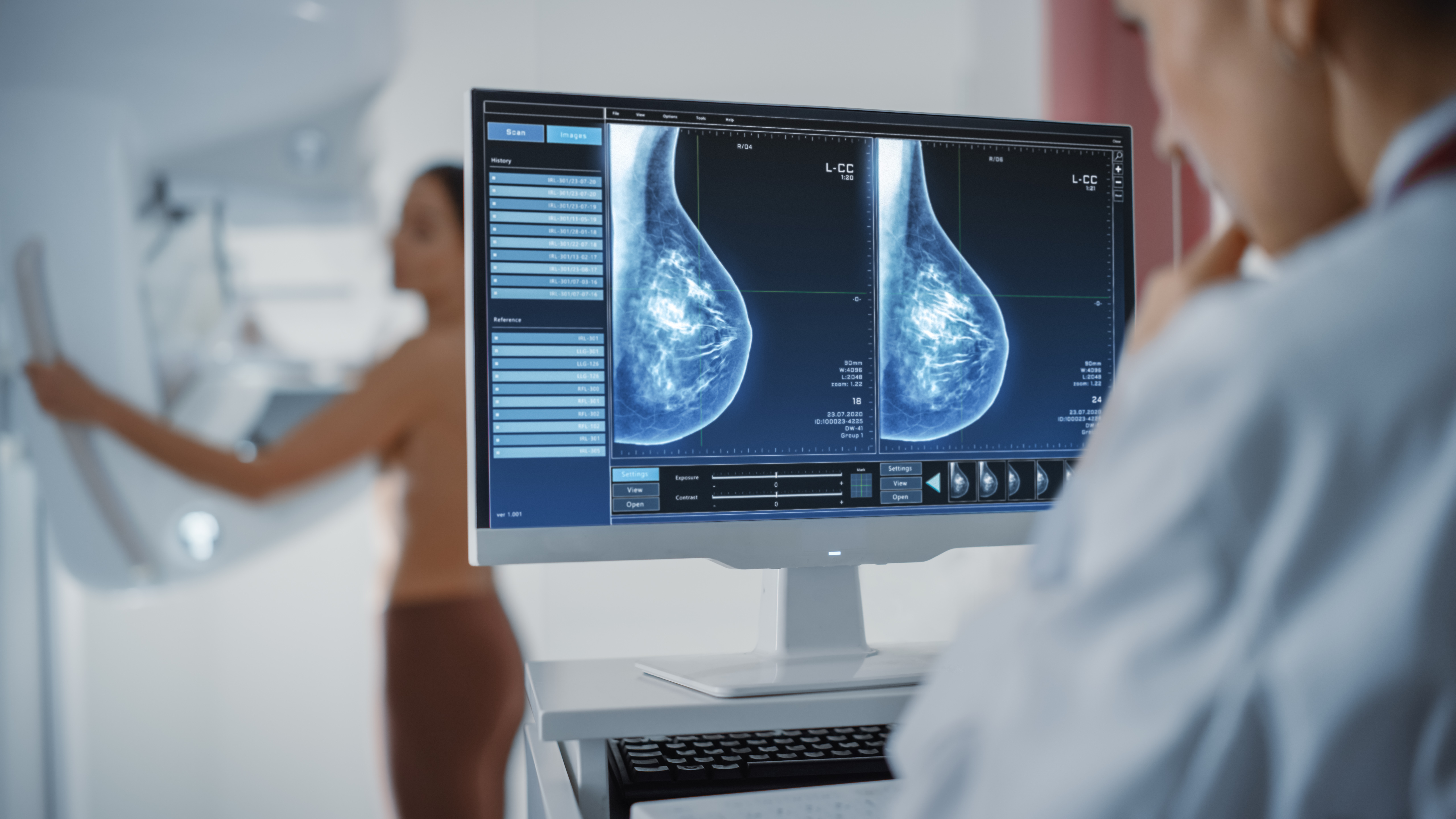
When necessary, additional imaging tests may be recommended, such as a breast ultrasound or a non-contrast breast MRI, which is considered the most accurate imaging technique for evaluating breast implants. The goal is not only to assess the integrity of the implant itself, but also to evaluate the surrounding tissues and identify any changes that may require treatment.
Revision breast surgery is planned on an individual basis, taking into account the condition of the implant, the patient's anatomy, and the desired outcome. In the simplest cases, the procedure consists of replacing the existing implants with the latest-generation implants, often using the same incision made during the original breast augmentation.
If the breasts have changed significantly over time, additional procedures, such as a breast lift (mastopexy), may be recommended to correct tissue laxity and restore the breast's shape, proportions, and symmetry.
"When conditions allow, revision surgery may involve nothing more than replacing the implants. In other cases, it is also necessary to reshape the breast tissues to achieve a natural-looking, harmonious result that will remain stable over time," explains Dr. Marino.
The objective is not simply to replace an implant, but to achieve a balanced, natural appearance that reflects the patient's body as it has evolved over the years.
Recovery following breast implant revision surgery varies depending on the complexity of the procedure performed. When only implant replacement is required, recovery is generally quicker and, in many cases, similar to that of a primary breast augmentation. However, if implant replacement is combined with additional procedures—such as a mastopexy or breast tissue reconstruction, the recovery period may be longer.
After surgery, patients should:
Proper post-operative care plays a crucial role in supporting tissue healing and helping ensure long-lasting, stable results.
Modern breast implants offer excellent safety and reliability. However, regular follow-up remains essential to monitor both the integrity of the implants and the natural changes that occur in the breasts over time.
Detecting early signs of implant wear or other changes often allows treatment to be planned under optimal conditions, reducing the likelihood of more complex surgery. For this reason, any change in the shape, position, or consistency of the breasts should always be assessed by an experienced plastic surgeon through a dedicated specialist consultation.