Ortopedia
22-09-2026
Fecha de publicación: 15-01-2026
Actualizado en: 10-02-2026
Asunto: Ortopedia
Tiempo estimado de lectura: 1 min

Autor del Artículo
Eleonora Orioli
Editor médico
Gabriella Santalena
Editor y Traductor
Viktoryia LuhakovaWith winter now fully underway, many people begin to notice mild joint discomfort: stiffer knees, less agile hands, and a neck that tends to become tense. But does cold weather really affect joint pain, or is it just a common belief?
Providing clarity is Dr. Gabriella Santalena, a rheumatology specialist at the Orthopedic Rehabilitation Unit of Istituto Clinico San Siro, who explains what happens to our bodies when temperatures drop and how to protect ourselves during the coldest months.
The explanation lies in joint physiology, particularly in cartilage, the tissue that acts as a cushion between bones. With age, cartilage loses elasticity and viscosity, becoming stiffer and less able to absorb shock.
“When cold weather arrives this stiffness increases:
This is why people suffering from osteoarthritis, one of the most common rheumatic conditions, tend to feel worse in autumn and winter. “Many patients with osteoarthritis report feeling well during the summer but experiencing a return of pain when cold weather sets in. This is not a matter of suggestion: temperature and humidity directly affect cartilage and bone, amplifying pain.”
Therefore, the relationship between cold and joint pain is not a myth: “There is a real correlation, also recognized by medicine. It is not just patient perception, but a phenomenon with well-defined biological mechanisms,” explains Dr. Santalena.
Cold weather does not affect only the joints, but also the muscles, which respond by increasing contraction in an attempt to generate heat.
“This is a defense mechanism, but if the contraction persists, it leads to:
During the colder months, not only joint pain but also muscle contractures increase, even among younger individuals.
Those who work outdoors or practice sports know well how muscles can become stiffer and more prone to inflammation: cold weather can literally ‘lock’ the body,” explains Dr. Santalena.
Among rheumatic conditions most affected by cold is fibromyalgia, which is characterized by widespread muscle pain and stiffness.
“Patients with fibromyalgia are particularly sensitive to seasonal change. With cold weather, muscles stiffen and pain intensifies, especially in areas such as the neck, shoulders, knees, and elbowss,” explains the rheumatologist.
In these cases, pain tends to become self-perpetuating: muscle contraction creates further joint tension, worsening stiffness.
“Just think of the cervical spine, when it’s cold, neck muscles stiffen ‘like cords,’ limiting movement,” the rheumatologist notes.
The situation is different for rheumatoid arthritis and psoriatic arthritis. These are chronic inflammatory diseases, and cold weather is not a direct cause of disease worsening. However, many patients report increased discomfort during the winter months, often related to reduced physical activity and less exposure to natural light.
Cold also affects peripheral circulation, as seen in Raynaud’s phenomenon.
“In these cases, cold alters the balance between vasodilation and vasoconstriction, causing the fingers to turn white, then bluish, and finally red. This is a painful and uncomfortable process that, over time, can lead to complications such as small ulcers on the fingertips,” explains Dr. Santalena.
Raynaud’s phenomenon is common in patients with autoimmune diseases (such as scleroderma, lupus, or connective tissue diseases), but it can also occur in otherwise healthy individuals, especially young women. In these cases, it is referred to as primary Raynaud’s, a benign form that still requires monitoring, as it does not always require extreme cold; sometimes a sudden temperature change or stress is enough to trigger it.
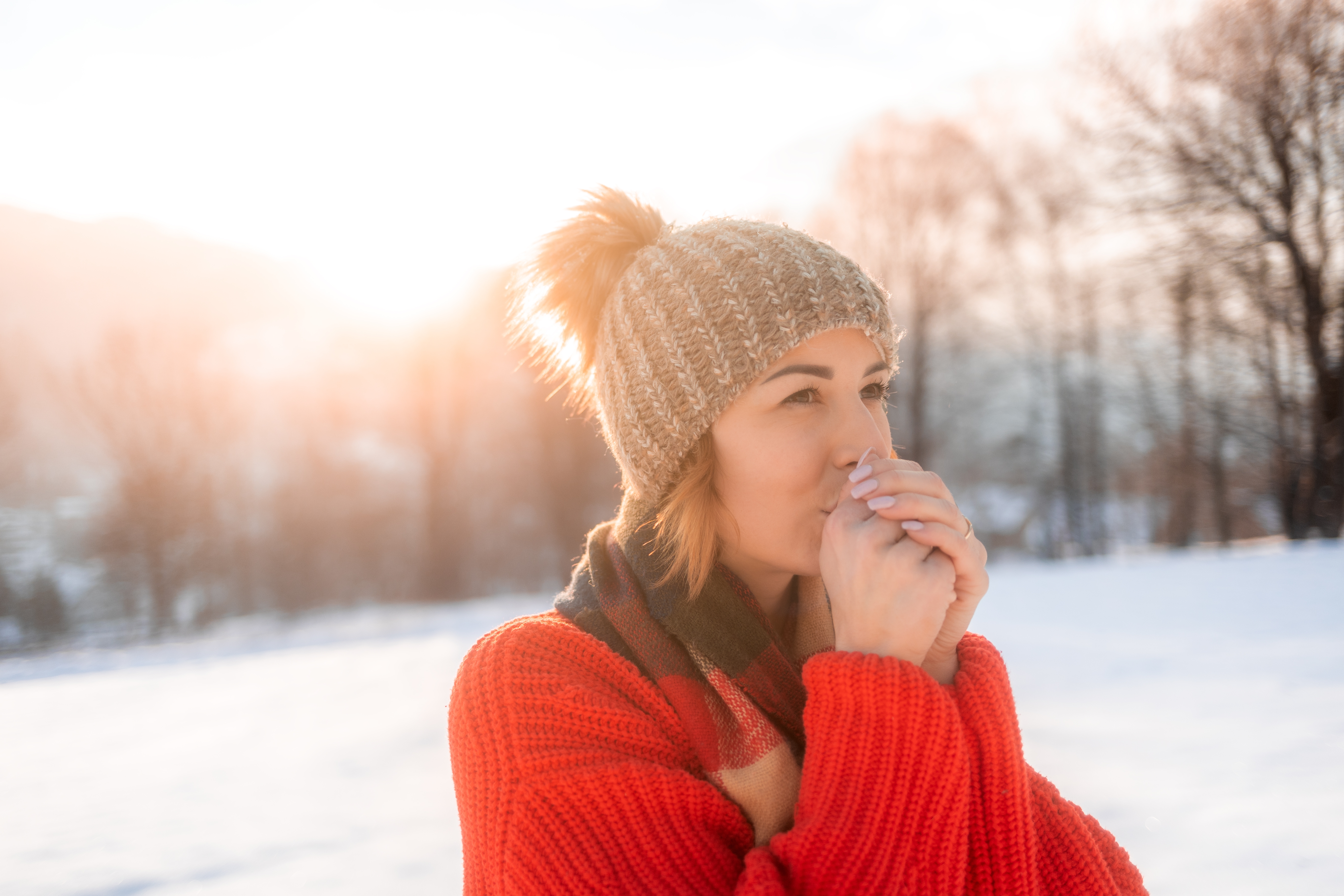
The first defense against cold-related joint pain is daily prevention. “Dressing warmly is essential: scarves, turtlenecks, and warm, dry clothing really make a difference. Cold is a silent enemy that stiffens muscles and joints,” reminds the doctor.
Regular movement is also crucial. Gentle activities such as walking, stretching, or light exercise help maintain joint mobility and stimulate circulation.
Finally, thermal therapies can be helpful: warm baths, mud therapy, and massage promote muscle relaxation and reduce pain. They are not a miracle cure, but a valuable support in coping with the cold season.
People with circulatory disorders or Raynaud’s phenomenon should pay special attention to keeping their hands and feet warm. Gloves and thick socks are essential, as are hand warmers for those who work outdoors or spend time in the mountains.
However, caution is needed: frozen hands should never be warmed directly on a radiator, as the sudden transition from cold to heat can damage capillaries.
In more severe cases, the rheumatologist may prescribe specific vasodilator therapies for the winter season.
If joint pain becomes severe, persistent, or interferes with normal daily activities, it is important to consult a physician or a rheumatologist.
“We need to determine whether this is a cold-related issue or a condition that requires more specific investigation. In particular, Raynaud’s phenomenon should always be evaluated to rule out underlying autoimmune diseases,” emphasizes Dr. Santalena.
In general, cold weather does not cause new diseases, but it can make existing pain or conditions more noticeable, especially those that are less apparent during the summer. For this reason, it is important to listen to your body and not ignore the signals it sends.
As Dr. Santalena concludes: “Cold weather should not be feared, but understood. With a few precautions, we can protect our joints and face winter with greater peace of mind.”