Investigación
25-09-2026
Fecha de publicación: 23-01-2026
Actualizado en: 10-02-2026
Asunto: Investigación, Neurología
Tiempo estimado de lectura: 1 min

Autor del Artículo
Laura Celotto
Editor médico
Martino Gianvito
Editor médico
Paola Panina
Editor y Traductor
Viktoryia LuhakovaA molecule previously investigated for the treatment of sleep–wake disorders has, for the first time, demonstrated the ability to protect neurons and promote myelin repair in experimental models of multiple sclerosis. The study, published today in Science Translational Medicine, identifies bavisant as a therapeutic candidate capable of acting on two of the most devastating mechanisms of the disease:
The project was coordinated by Università Vita-Salute San Raffaele and IRCCS Ospedale San Raffaele. This scientific achievement brought together leading international centers involved in multiple sclerosis research, including the Paris Brain Institute, Institut du Cerveau (ICM), the University of California San Francisco, and the University of Münster and, starting from the exploration of a library of over 1,500 drugs, identified a single candidate ready for clinical development.
The discovery represents the first major result of BRAVEinMS, an international research network launched in 2017 with funding from the International Progressive MS Alliance, of which the Italian Multiple Sclerosis Association (AISM) and its Foundation (FISM) are founding members, part of the managing board, and financial supporters.
Progressive multiple sclerosis is the most severe form of the disease, affecting more than 1 million people worldwide and approximately 15,000–20,000 in Italy.
Unlike relapsing forms, it is characterized by continuous degeneration of nerve fibers and loss of myelin, the sheath that protects neurons and enables proper transmission of nerve signals. The result is a progressive loss of motor, visual, and cognitive functions that current treatments are unable to halt.
Over recent decades, research has focused on developing pharmacological approaches capable of simultaneously repairing myelin and protecting neurons. Achieving this goal, slowing or stopping neurodegeneration, has so far remained elusive.
In 2017, the BRAVEinMS consortium posed an ambitious question: is it possible to repurpose drugs already approved for other indications to treat multiple sclerosis?
Starting from a pool of known, human-approved compounds, so-called repurposed drugs, researchers sought the fastest and most effective way to evaluate both their neuroprotective and regenerative effects on the nervous system.
To answer this question, they developed an unprecedented drug-screening platform combining:
This approach is comparable to building a “wind tunnel for drugs”: instead of testing one molecule at a time in a slow and costly manner, thousands of compounds can be filtered, with only those showing regenerative potential advancing further.
The selection process was both rigorous and highly selective. From the initial 1,500 drugs, in silico analysis identified 273 molecules with potential activity on myelin and neurons.
Following extensive toxicity testing on neuronal cells and oligodendrocytes (the cells responsible for myelin production in the nervous system) of both human and animal origin, the number was reduced to 32 compounds, and subsequent efficacy testing narrowed the candidates to six.
Ultimately, researchers focused on bavisant, a histamine H3 receptor antagonist with an already well-established safety profile. In experimental models of multiple sclerosis, including human–mouse chimeras, bavisant was shown to:
Overall, the molecule acts on two different brain cell types, neurons and myelin-producing cells, allowing nervous tissue both to repair itself and to better resist damage.
“For the first time, we have demonstrated that it is possible, through a systematic approach based on human in vitro and in vivo models, to identify a molecule capable of regenerating myelin while simultaneously protecting neurons in progressive multiple sclerosis.
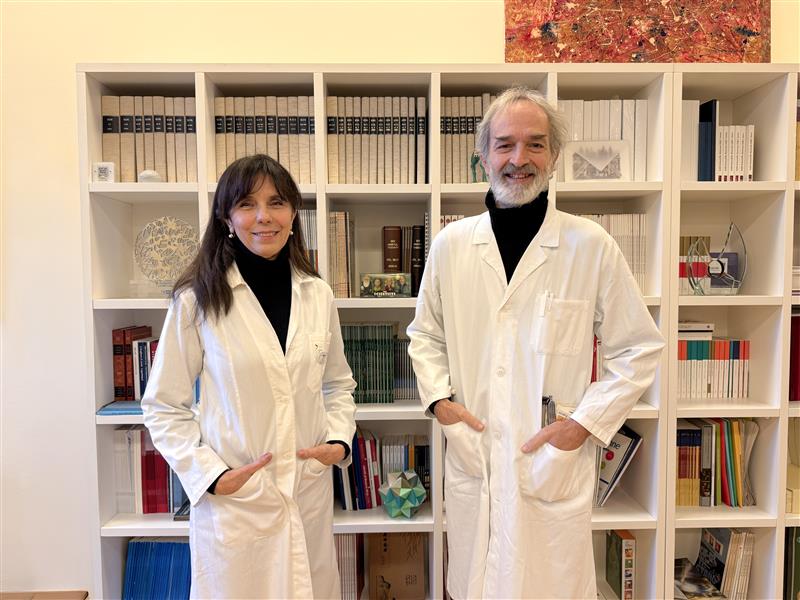
This platform is not only useful for identifying new treatments, but also for creating a new way of conducting pharmacological research: faster, more predictive, and more closely aligned with the needs of people living with multiple sclerosis,” explains Paola Panina, Professor of Cellular and Experimental Biology at Università Vita-Salute San Raffaele and senior co-author of the study.
The success of BRAVEinMS is the result of an international collaborative network.
“Through an international effort within the BRAVEinMS consortium, we developed an innovative drug-screening platform to accelerate the discovery of remyelinating and neuroprotective molecules. We identified several promising drugs that improve myelin repair and neuroprotection in preclinical models of multiple sclerosis, including bavisant, a selective histamine H3 receptor antagonist with strong translational potential,” explains Brahim Nait-Oumesmar, senior co-author and group leader at the Paris Brain Institute.
“Our study represents an important step toward developing clinical trials targeting the mechanisms of neurodegeneration and disability progression in multiple sclerosis. The integration of in vitro phenotypic assays using induced pluripotent stem cell (iPSC)-derived cells, together with humanized mouse models in the screening process, enables validation of drug candidates in human-relevant preclinical models and represents a significant advance,” states Professor Tanja Kuhlmann, Institute of Neuropathology, University of Münster, Germany.
“The SPOKE knowledge graph, the platform used for in silico analysis, was essential for prioritizing drug candidates in this pioneering study. By integrating graph theory and machine learning, we reduced thousands of compounds to a few hundred, simplifying subsequent in vitro and in vivo testing. This work highlights the power of computational tools in accelerating drug discovery and underscores the impact of international, multidisciplinary collaboration,” comments Professor Sergio Baranzini of the University of California San Francisco.
Bavisant is not a newly synthesized compound, it is an already known drug. This translates into shorter development timelines, lower costs, and greater safety compared with developing a new molecule from scratch, an enormous advantage for a disease affecting hundreds of thousands of people and requiring long-term treatment.
The BRAVEinMS consortium is continuing studies on the drug’s mechanism of action and formulation optimization in order to move toward human efficacy studies (Phase 2 clinical trials) in the near future.
This research was made possible through funding from the International Progressive MS Alliance and contributions from academic and industrial partners within the consortium. The Alliance is an unprecedented global collaboration bringing together major MS organizations worldwide, including AISM and FISM, along with researchers, healthcare professionals, pharmaceutical companies, foundations, donors, and people living with progressive multiple sclerosis.
“The results of BRAVEinMS confirm that investing in strategic, shared research focused on the needs of people with progressive MS is a winning path,” states Mario Alberto Battaglia, President of FISM and of the International Federation of Multiple Sclerosis Societies.
“We believed in an idea: combining artificial intelligence, stem-cell-based modeling, and collaborative science to accelerate the discovery of new therapies for progressive multiple sclerosis.
Today, that vision has delivered not only a real therapeutic candidate now just one step away from clinical application, but also over 30 additional potential candidates for progressive MS. Moreover, we have built and validated a functional screening platform capable of assessing the neuroprotective potential of virtually any molecule, an invaluable tool for transforming scientific knowledge into treatments,” concludes Gianvito Martino, Vice-Rector for Research and Third Mission at Università Vita-Salute San Raffaele and Scientific Director of IRCCS Ospedale San Raffaele.