

Oncología, Enfermedades de páncreas
20-03-2026
Fecha de publicación: 22-10-2026
Actualizado en: 22-10-2026
Asunto: Enfermedades de páncreas
Tiempo estimado de lectura: 1 min
From the first procedure performed in Italy in 1985 to the emerging possibilities offered by robotic surgery and potential future indications in selected patients with type 2 diabetes, pancreas transplantation continues to represent one of the most advanced areas of transplant medicine.
It is a complex procedure requiring a high level of surgical and organisational expertise, but in appropriately selected patients it can restore endogenous insulin production and significantly improve quality of life and metabolic control.
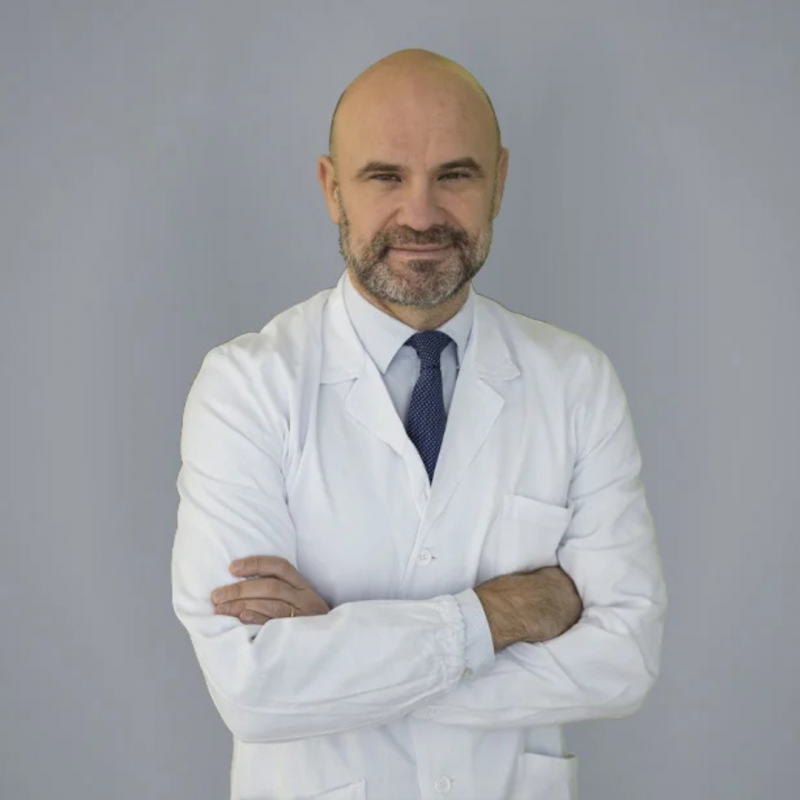
We discuss this with Professor Stefano Partelli, pancreatic surgeon in the Pancreatic Surgery and Transplantation Unit at IRCCS Ospedale San Raffaele; Professor Paolo Rigotti, consultant in the same Unit, directed by Professor Massimo Falconi; and Dr Rossana Caldara, Head of the Transplant Programme at IRCCS Ospedale San Raffaele and physician in the Regenerative Medicine and Transplantation Unit, directed by Professor Lorenzo Piemonti.
Pancreas transplantation is currently the only surgical procedure capable of restoring endogenous insulin production in patients with type 1 diabetes, allowing near-physiological metabolic control in most cases and helping to slow or prevent the progression of chronic complications.
When the transplant is successful, patients no longer require daily insulin injections, resulting in a marked improvement in quality of life and metabolic control.
Pancreas transplantation is a complex procedure, not only from a surgical perspective but also from an organisational one. The success of the transplant depends on highly efficient coordination between several stages, including:
The pancreas is a particularly delicate organ and must be retrieved, transported and preserved appropriately before transplantation.
In particular, it is essential to minimise the so-called cold ischaemia time, meaning the period during which the pancreas is preserved without blood perfusion. The shorter this interval, the greater the likelihood of good graft function.
Pancreas transplantation is not an alternative to insulin therapy for most people with diabetes. It is reserved for carefully selected patients in whom the expected benefits outweigh the risks associated with surgery and immunosuppressive therapy.
“The main candidates are patients with type 1 diabetes,” Professor Rigotti explains. “In recent years, new technologies such as continuous glucose monitoring systems and insulin pumps have significantly improved disease management, but not all patients are able to achieve adequate glycaemic control.
Candidates for isolated pancreas transplantation are those patients who, despite all available therapeutic efforts, experience severe metabolic complications or have documented failure of insulin therapy to prevent the complications of diabetes.”
If the patient has also developed kidney failure as a complication of diabetes, a simultaneous pancreas-kidney transplant may be performed, restoring both endogenous insulin production and renal function.
Pancreas transplantation is one of the most complex procedures in transplant surgery and carries significant risks, particularly during the first weeks after surgery. In the most severe cases, postoperative complications may make it necessary to remove the transplanted pancreas.
“In most cases, however, transplantation is successful and allows patients to resume natural insulin production. In patients who also undergo kidney transplantation, renal function is generally restored as well.
As with all organ transplants, there is also a risk of rejection. For this reason, patients who undergo either isolated pancreas transplantation or simultaneous pancreas-kidney transplantation require lifelong immunosuppressive therapy and regular follow-up.
When the postoperative course is favourable, the benefits can last for many years, and many patients remain insulin-independent even decades after transplantation,” Professor Partelli emphasises.
The future of pancreas transplantation is particularly promising, both in terms of surgical technique and potential indications.
From a technical perspective, robotic surgery may represent one of the most important innovations of the coming years.
Thanks to greater precision of movement and a less invasive approach, robotic surgery may facilitate certain technical stages of the procedure, particularly in patients with obesity, a condition that is increasingly common among people with type 1 diabetes as well.
Another area of growing interest concerns the possible extension of indications to type 2 diabetes.
Studies, particularly from the United States and the United Kingdom, suggest that a carefully selected subgroup of patients may benefit from pancreas transplantation. Although type 2 diabetes differs from type 1 diabetes in several respects, some patients nevertheless develop severe impairment or exhaustion of endogenous insulin secretion.
“In these cases,” the experts conclude, “pancreas transplantation could represent a new therapeutic option. Further studies will be needed to identify precisely which patients are most likely to benefit.”
“San Raffaele Hospital has several decades of experience in this field and was one of the pioneering centres in Italy. In 1985, it became the first Italian centre to perform an isolated pancreas transplant.
Today, approximately 10–15 pancreas transplants are performed here each year. Although this may appear to be a relatively small number, only around 35 pancreas transplants are performed annually across Italy as a whole: this consistently places San Raffaele among the top two centres in the country by transplant volume,” Professor Partelli explains.
The team’s expertise extends well beyond the operating theatre. At San Raffaele, transplant surgeons and specialists in Transplant Medicine work together throughout the entire pathway, from candidate selection and preoperative preparation to postoperative and long-term follow-up.