Recherche, Pathologies du rachis
11-09-2026
Date de publication: 25-09-2026
Mise à jour le: 25-09-2026
Sujet: Recherche
Temps de lecture estimé: 1 min

Rédacteur médical
Alessandro Aiuti
Rédacteur médical
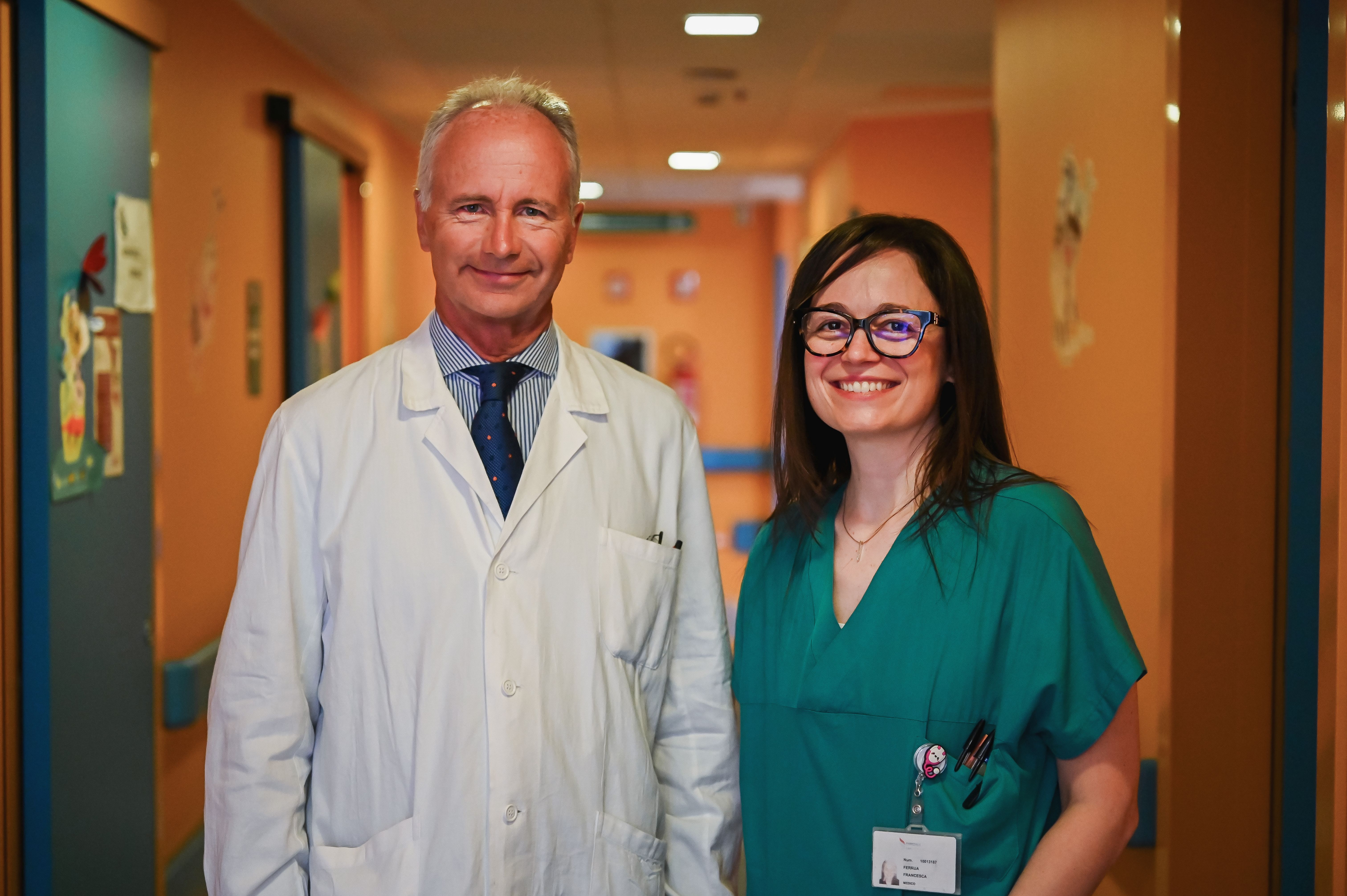
Francesca Ferrua
Rédacteur et traducteur
Viktoryia LuhakovaA single infusion of genetically corrected autologous hematopoietic stem cells can provide lasting clinical benefit in patients with Wiskott-Aldrich syndrome, a rare genetic disorder that affects the immune system and platelet function, exposing patients from early childhood to severe infections, bleeding, eczema, and autoimmune complications.
These findings are reported in an article published in the New England Journal of Medicine, authored by Professor Alessandro Aiuti, Head of Pediatric Immunohematology at IRCCS Ospedale San Raffaele, Deputy Director of the San Raffaele-Telethon Institute for Gene Therapy (SR-Tiget), and Professor of Pediatrics at Vita-Salute San Raffaele University, who is the study’s senior and corresponding author.
The publication reports the results of 27 patients treated with etuvetidigene autotemcel (etu-cel), an autologous gene therapy developed to correct the genetic defect underlying the disease.
The patients were followed for at least 5–7 years, with some followed for more than 13 years: survival at 1 and 5 yearswas 96%, and treatment was followed by a marked reduction in severe infections and moderate or severe bleeding. Furthermore, none of the adverse events observed were attributed to the gene therapy product, confirming a favorable risk-benefit profile.
The program originated and was developed at SR-Tiget, founded in 1996 as an alliance between IRCCS Ospedale San Raffaele and Fondazione Telethon to develop gene therapies for rare genetic diseases, and within the Pediatric Immunohematology and Bone Marrow Transplant Unit at IRCCS Ospedale San Raffaele. Both played a central role in developing the therapeutic approach, providing clinical care to patients, and conducting their long-term follow-up. Between December 2025 and January 2026, Fondazione Telethon obtained marketing authorization for this gene therapy in both the European Union and the United States.
Wiskott-Aldrich syndrome is a rare genetic disorder linked to the X chromosome and caused by alterations in the WASgene, which contains the instructions for producing the WASP protein, essential for the proper function of blood and immune system cells. Its incidence is 4 per 1,000,000 live births, almost exclusively affecting males, while females are generally healthy carriers.
The disease usually manifests during the first months of life with a combination of clinical signs: low levels of small-sized platelets, frequent and potentially life-threatening bleeding, recurrent and/or severe infections, eczema, autoimmune and/or autoinflammatory manifestations, and an increased risk of blood cancers.
Supportive treatments, such as immunoglobulins, antimicrobials, platelet transfusions, or immunosuppressive medications, can control some complications but do not correct the genetic cause of the disease. Allogeneic hematopoietic stem cell transplantation can be curative, but it depends on the availability of a compatible donor and carries significant risks, including infections, rejection, graft failure, and graft-versus-host disease.
The gene therapy described in the publication is based on an autologous approach: hematopoietic stem cells are collected from the patient, genetically corrected in the laboratory using a lentiviral vector that introduces a functional copy of the WAS gene, and reinfused into the patient following reduced-intensity chemotherapy conditioning. The goal is to enable the body to produce blood and immune system cells capable of expressing the WASP protein, which is defective in patients with Wiskott-Aldrich syndrome.
The article published in the New England Journal of Medicine combines data from 2 prospective clinical trials and an expanded access program. A total of 27 patients were treated, with a median age of 2.6 years at the time of treatment and a follow-up period of at least 5.7 years; some patients were followed for more than 13 years. The results show:
In addition, patients showed:
At the latest follow-up, all patients had been able to discontinue immunoglobulin replacement therapy; 3 years after treatment, all had stopped living in protective isolation, more than 80% were attending school or preschool, and approximately half were participating in sports.
Among the adverse events observed in patients, none were attributed to the gene therapy product, confirming a favorable long-term risk-benefit profile. The most common grade 3 or higher adverse event was infection related to the central venous catheter, while no evidence of oncogenesis was observed.
“These results represent an important milestone in the history of gene therapy for Wiskott-Aldrich syndrome. Long-term follow-up shows us that a single infusion of genetically corrected hematopoietic stem cells can translate into stable clinical benefit, reducing complications that profoundly affect the lives of patients and their families and thereby positively impacting their quality of life,” says Francesca Ferrua, pediatrician at the Pediatric Immunohematology Unit of IRCCS Ospedale San Raffaele and the Clinical Unit of SR-Tiget, and first author of the study.
The publication marks a new milestone in a research program that began more than 20 years ago at SR-Tiget. Following the first clinical results published in Science in 2013 and the interim data reported in The Lancet Haematology in 2019, it confirms the value of an approach that originated in academic research and evolved over time through collaboration between laboratory research, clinical care, and translational development.
Between December 2025 and January 2026, this work also led to the approval of the gene therapy etuvetidigene autotemcel (Waskyra®) by the U.S. regulatory agency (FDA) and the European Commission, following the positive opinion of the Committee for Medicinal Products for Human Use (CHMP) of the European Medicines Agency (EMA).
The therapy was developed with the contribution of industry partners (GlaxoSmithKline and Orchard Therapeutics) and was subsequently reacquired and brought through the approval process by Fondazione Telethon, which now holds the rights to the therapy as part of a nonprofit model designed to ensure continuity in development and access to gene therapies for ultra-rare diseases.
“Looking to the future, this experience points to a possible path for making advanced therapies available even for diseases so rare that they risk falling outside traditional drug development models,” adds Professor Aiuti. “For families living with Wiskott-Aldrich syndrome, and for many other patient communities still without a cure, the path initiated at SR-Tiget in Milan demonstrates how research can become a concrete possibility when scientific innovation, clinical care, and responsibility toward patients remain part of the same project.”